 海关法规查询系统

目录
· “黑海谷物倡议"续期
· TFA 签订最新进展
· UNCTAD 强调 NTFC 可持续的重要性
·《 2021 年太平洋发展中岛国(PIDEs)的数字和可持续贸易便利化》
· AEO 计划的真正价值
·欧盟海关风险管理

“黑海谷物倡议"续期
WTO 呼吁 G20 慎用贸易限制措施
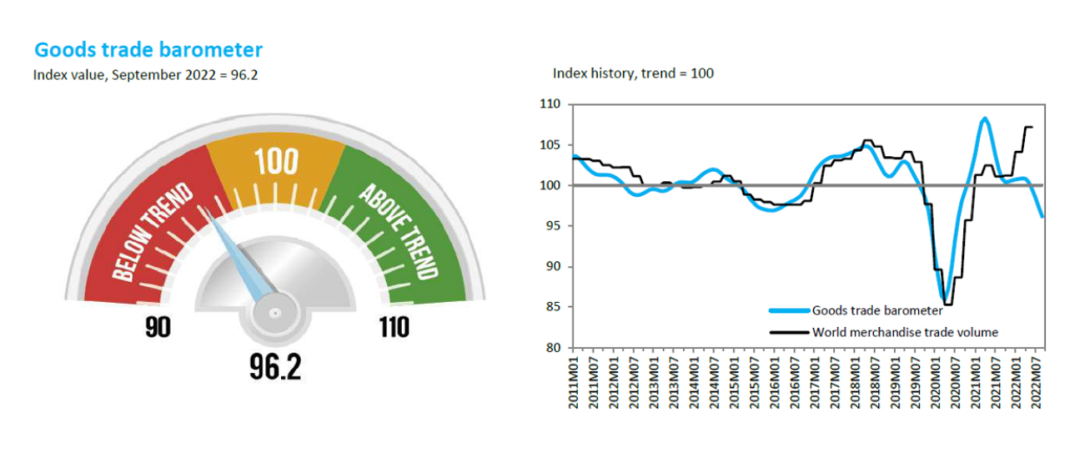
WTO 货物贸易晴雨表显示全球贸易需求正在降温
WCO 数据与统计工作组举行第一次会议
美继续延长对华新冠医疗用品 301 关税例外豁免
美国与东盟启动全面战略伙伴关系
欧盟通过关于跨国企业可持续性报告义务指令
欧盟理事会决定将违反限制措施行为纳入欧盟犯罪
新加坡与韩国签署数字经济协定

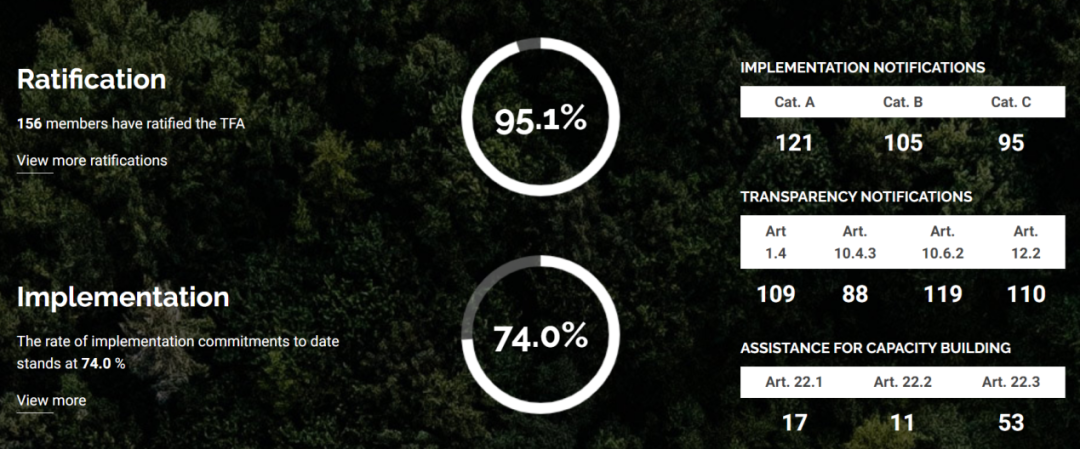
TFA 签订最新进展
ATA 单证册将向数字化过渡
UNECE 制定新的货物追踪国际标准
全球快递行业为海关贸易便利化能力打分
泰国启动首个区块链国家数字贸易平台试点
印度经验表明国际贸易便利化测评指标与其实际表现不符
(1)经济合作与发展组织(OECD)的贸易便利化指标(TFIs);(2)世界银行营商环境指数(EODB);(3)世界银行的物流绩效指数(LPI);(4)世界经济论坛的全球竞争力指数(GCI);(5)世界银行的世界治理指标(WGI);(6)联合国的全球贸易便利化和无纸化贸易实施调查(GSTF-PTI)。
UNCTAD 强调 NTFC 可持续的重要性
《 2021 年太平洋发展中岛国(PIDEs)的数字和可持续贸易便利化》
AEO 计划的真正价值
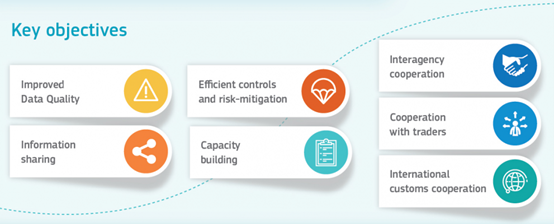
欧盟海关风险管理
• end •
本《动态》内容均转载、编译或摘编自标明来源的公共信息,目的在于尽可能客观地传递相关信息,并不代表睿库赞同其观点和对其真实性负责。如有转载使用须自负法律责任。
相关附件
附件内容预览
EUROPEAN COMMISSION Brussels, 18.1.2021 COM(2021) 9 final REPORT FROM THE COMMISSION TO THE COUNCIL AND THE EUROPEAN PARLIAMENT Third Progress Report on the implementation of the EU Strategy and Action Plan for customs risk management {SWD(2021) 2 final} EN EN 1. INTRODUCTION Customs authorities handle a substantial and constantly increasing volume of goods. They need to facilitate increasing amounts of legitimate trade and at the same time, they are continuously engaged in fighting fraud and the smuggling of illicit or unsafe goods. Meanwhile, major challenges such as the current public health crisis, the consequences of the UK’s departure from the EU's single market and Customs Union, and the rise of digitalisation and e-commerce affect the work of customs. Risk management allows customs authorities to better identify and target those consignments that present a risk. It allows addressing those risks at the best moment in the supply chain to ensure the security and safety of EU residents and the protection of the financial interest of the EU and its Member States. It also allows optimising the use of customs resources. In 2014, the Commission adopted an EU strategy and action plan for customs risk management1. The strategy applies to the 2014-2020 period and identifies seven key objectives underpinned by the overall aim of reaching a high quality, multi-layered approach to risk management. The action plan set out concrete measures for each objective. Following the Council’s request, the Commission presented a first progress report2 on the implementation of the strategy and action plan in July 2016, and a second one in July 20183. In its conclusions of January 2019 on the second progress report, the Council welcomed the progress made in implementing the strategy, including the strengthening of collaboration between all the actors involved, the launching of new initiatives – in particular the Commission’s decision on financial risk criteria – and the participation of customs administrations in security-related activities. It also underlined that risk management is an ongoing process - not limited to specific actions with clearly defined start and end dates - and that customs authorities must continue to innovate and be prepared to respond to new or emerging threats. In its January 2019 conclusions, the Council invited the Commission to present, within 2 years, a third and final progress report on the implementation of the current strategy covering the period 2019-2020. This third progress report is the Commission’s response to that request. Like the previous reports, it provides an overall qualitative assessment of the implementation of the strategy, setting out the progress made on each of the seven key objectives since the second report. It highlights, objective by objective, the most significant advances and the 1 COM(2014) 527 final. 2 First Progress report on the implementation of the EU strategy and action plan for customs risk management.https://eur-lex.europa.eu/legal-content/EN/TXT/PDF/?uri=CELEX:52016DC0476&from=EN (for the period 2015-2016). 3 Second progress report on the implementation of the EU strategy and action plan for customs risk management.: https://eur-lex.europa.eu/legal-content/EN/TXT/PDF/?uri=CELEX:52018DC0549&from=en (for the period 2017-2018). 1 problems encountered, while the accompanying Commission Staff Working Document provides a deeper analysis. 2. PROGRESS REPORT 2.1. Objective 1 - Improving data quality and filing arrangements The objective of setting up a comprehensive legal framework with requirements for ‘multiple filing’ of data for security risk analysis where entry summary declaration data will be provided in layers and for improving data quality has been reached, although its full implementation remains to be achieved. The legal framework The legal framework consists of the Union Customs Code (UCC) and the detailed rules contained in the delegated and implementing acts. The Code entered into force on 1 May 2016. In 2020, the UCC implementing and delegated acts were further updated to integrate the rules on advance information and the analysis of security and safety risks. The Union Customs Code evaluation The Commission has recently launched an evaluation of the UCC to be finalised by the end of 2021. It aims to establish whether the legislation and the operational electronic systems by that date are still appropriate for ensuring modernised, streamlined and simplified processes to assist compliant traders and customs authorities. The evaluation will inform future decisions on whether the Code and its implementing and delegated acts should be revised. It will in particular consider whether the UCC is flexible enough to deal with the management of customs formalities during crises such as the current pandemic and in light of new business models such as e-commerce. The development and implementation of appropriate IT solutions The full implementation of the UCC relies on 17 electronic systems. While tangible progress is being made in this area and eight systems have already been deployed and are now operational, nine are still under development. This is in line with the UCC work programme planning. For further details, see the next chapter. 2.2. Objective 2 - Ensuring availability of supply chain data, sharing of risk- relevant information and control results The Commission, together with the Member States and businesses, has continued to develop the IT systems that support the full implementation of the Code. Since the last progress report, important milestones have been reached in the development and deployment of the planned IT systems as well as on rules to provide or exchange information. The full set of IT systems will further modernise and harmonise import, export and transit processes, and introduce new concepts such as centralised clearance. 2 The new Import Control System (ICS2) For goods entering the EU, the reform of EU advance cargo information system (ICS) is progressing well. The system aims to inform customs authorities about the arrival of goods well before their actual shipment. The development of ICS2 is ongoing and a first delivery is expected in spring 2021. The full system will be delivered in three releases as detailed in the accompanying Staff Working Document. The system is expected to be fully operational in October 2024 and will significantly improve the analysis of safety and security risks. Other projects and systems The ‘Surveillance 3’ (SURV3) system collects information provided in customs declarations and stores it in a database. SURV3 upgrades the earlier (SURV2) system and aligns it with UCC requirements. The database records and centralises EU trade data (imports and exports) that national customs authorities extract from their systems and transmit to the Commission on a daily basis. The use of the data analytics platform began with the deployment of a Trade Flow dashboard in March 2020. More functionalities will be added in due course to allow the Commission to better exploit surveillance data. The Customs Union Performance (CUP) is used as a management/steering tool for evidence-based policy formulation and strategic decision-making as well as to evaluate performance and monitor trends. The CUP is gradually developing key performance indicators to evaluate how Member States are performing customs controls, to highlight the impact of Customs in collecting revenues for the EU budget, to ensure safety and security of the EU citizens, to protect the internal market, and to emphasise the importance of Customs administrations’ contribution to growth, competitiveness and innovation goals in line with the Europe 2020 agenda. The Common information-sharing environment (CISE) promotes the exchange of relevant maritime information between the different authorities involved. It has made significant progress by entering its transitional phase (2019–2021) managed and led by the European Maritime Safety Agency (EMSA) in close cooperation with the Member States. The Digital Transport and Logistics Forum (DTLF) led by the Commission brings together transport and logistics experts and stakeholders from both the private and the public sector, with a view to building a common vision and roadmap for digital transport and logistics. In April 2020, the Council adopted new rules, which will make it easier for freight transport companies to provide information to authorities in digital form. Increased digitalisation of freight transport and logistics will bring significant cost savings for businesses, and make the transport sector more efficient and sustainable. The Trade Control and Expert System (TRACES) is the European Commission’s multilingual online management tool for all sanitary and phytosanitary requirements on intra-EU trade and imports of animals, semen and animal embryos, food, feed and plants. Its main objective is to digitalise the entire certification process, in line with the Digital 3 Agenda for Europe4. The Commission has initiated a new project in the form of the development of an IT system for electronic submission and management of catch certificates under Regulation (EC) 1005/20085 on establishing a Community system to prevent, deter and eliminate illegal, unreported and unregulated fishing. This new system will assist Member States' authorities in carrying out their verification and risk management tasks in relation to imports of fishery products into EU. The EU Single Window Environment for Customs initiative aims to facilitate the automated verification of supporting documents provided with the customs declaration at customs clearance. As such, it will be an instrument to support the coordination of controls between customs and partner competent authorities at the border and to provide feedback to economic operators on controls. The Single Window links national customs systems and EU e-licensing solutions such as TRACES or the Dual Use Goods export system. 2.3. Objective 3 - Implementing control and risk mitigation measures where required (‘assess in advance - control where required’) The third objective (‘assess in advance - control where required’) is central to the strategy in the sense that all the other objectives should ultimately contribute to enabling custom authorities to better target their controls in terms of when and where they take place. Major progress has been made on Objective 3, notably on Priority Control Area (PCA), financial risks and product compliance and safety. The Commission is also further developing and expanding the use of Credibility Checks. Priority Control Area (PCA) PCA is a key mechanism in the Customs Risk Management Framework (CRMF) that enables the EU to designate specific areas to be treated as a priority for customs controls. The PCA tool has been used to coordinate EU customs actions in most major risk areas already since 2007, delivering operational results and providing strategic lessons. During crisis, priorities must change, and PCAs are therefore replaced by joint actions that focus on the particular crisis. This was the case for COVID-19 in 2020. Financial Risk Criteria (FRC) The Commission’s inspections on traditional own resources (TOR) as well as previous work on EU action to reduce the customs gap have pointed to a lack of harmonisation in the performance of customs controls for mitigating the risk of undervalued imports throughout the Customs Union. 4 https://ec.europa.eu/digital-single-market/ 5 OJ L 286, 29.10.2008, p. 1. 4 In May 2018, the Commission adopted an important implementing decision, which lays down measures for the uniform application of customs controls by establishing common financial risk criteria and standards (FRC)6. The FRC are a set of rules that allow the Member States customs clearance systems to systematically identify (or ‘flag electronically’) transactions that present a potential financial risks and that require further scrutiny and/or control action. They encompass the majority of known financial risks and help provide a more consistent approach to customs controls. The FRC decision, only available to customs risk management experts in the Member States, enables Member States to address financial risks in an equivalent manner at the external border, without placing an undue burden on legitimate trade. It also identifies the most opportune time and place of the control depending on the scope and nature of the risk and on the availability of data and documentation. Product safety and compliance In 2019, the European Parliament and the Council adopted Regulation 2019/1020 on market surveillance and compliance of non-food products with EU legislation7. This new legislation strengthens the legal framework for controls on goods entering the EU. It will significantly boost cooperation between customs and market surveillance authorities in view of more effective checks on imported products. The new regulation will apply in full from 16 July 2021. Preparations for its efficient implementation are under way. Credibility checks Credibility checks (CC) were introduced via TARIC in the Member States national systems in 2013 and are being continuously developed and expanded. They are automated checks introduced at the clearance stage of imports that assess the validity of the values declared. CC check the compatibility of entries in the customs declaration against specific parameters and, in the case of noncompliance, either block them or flag them - creating a warning so that Customs authorities may check the declaration. 2.4. Objective 4 - Increasing capacity to ensure effective implementation of the Common Risk Management Framework and to increase responsiveness to newly identified risks Improving the implementation of the Customs Risk Management Framework (CRMF) Member State customs administrations have prioritised the improvement of CRMF implementation, and have taken a number of actions in this area. This has increased 6 C(2018)3293 final. 7 Regulation (EU) 2019/1020 of the European Parliament and of the Council of 20 June 2019 on market surveillance and compliance of products and amending Directive 2004/42/EC and Regulations (EC) No 765/2008 and (EU) No 305/2011. OJ L 169, 25.6.2019, p. 1-44. 5 cooperation and the sharing of risk information between Member States, including through Customs Risk Management System (CRMS), and improved financial risk management. Several Member States have also reported an improvement in risk analysis, thanks to new or improved IT systems and the recruitment or training of staff. However, many Member States also reported obstacles that have kept them from implementing all the desired actions or making further progress. The biggest challenges are insufficient IT infrastructure, financial constraints, and lack of human resources and data availability. The Customs Risk Management System (CRMS) The CRMS is a common database where forms and messages are sent and stored. Member States can consult it to identify which information needs to be introduced into the national risk analysis system or communicated with each other. Since 2005, the CRMS has regularly been updated to add new functionalities and improve its user-friendliness. In 2016, a complete revision (‘CRMS2’) was decided based on the experience acquired with the Member States and users of the system. The first step (analysis of the CRMS 2 requirements) has now been completed and the development phase is under way. This will be followed by a testing phase, before CRMS2 is foreseen to go live in Q4 2021. A specific COVID-19 crisis alert was opened on 4 February 2020 in the CRMS/crisis management to allow Member States to share and receive information and guidance on prioritising risks for customs controls related to COVID-19. Since then, more than 400 Risk Information Forms (RIFs) were issued on dangerous and non-compliant medical products, medical devices and personal protective equipment. Thematic working groups Many EU-level working groups, comprised of representatives of the European Commission and the Member States, are actively working on key issues to improve customs controls and risk management capacities. Nearly all Member States participate in one or more contact or expert groups established under the Customs programme to increase cooperation on the ground and coordination between customs administrations at the EU’s external frontiers. Such groups include the European Land Frontier Contact Group (LFCG) and several ports and airports contact groups (RALFH, ODYSSUD and ICARUS). Several Member States also participate in the Customs Eastern and South-Eastern Land Border Expert Team (CELBET), which aims to strengthen and improve operational cooperation at this EU border. 2.5. Objective 5 - Promoting interagency cooperation and information sharing between customs and other authorities at Member State and EU level Interagency cooperation and information sharing between customs and other competent authorities at Member State and EU level is highlighted in the strategy as an important 6 means of ensuring more effective risk management and improving safety and supply chain security. Improving cooperation and information sharing with other authorities is a high priority for most Member States. While further progress has been made in setting up interagency agreements and memoranda of understanding, most Member States reported that improvements in integration of risk information or enhanced risk management practice has been limited due to legal constraints related to insufficiently aligned requirements for data privacy and the protection of fundamental rights, among other factors. The multiple legal frameworks at play in interagency cooperation are viewed as hampering coordination and common priority setting. The Commission department responsible for customs matters is actively involved in the Security Union activities, and the Customs Cooperation Working Party has been addressing a number of relevant priority areas. Safety The Official Controls Regulation (EU) 2017/6258 entered into force in December 2019 establishing an integrated approach to import controls of foodstuffs, feed and livestock. Furthermore, the Commission proposal for an EU Single Window Environment for Customs will allow collaborative processing, sharing and exchange of information and better risk assessment for government agencies. Intellectual property rights (IPR) In November 2020, the Commission adopted the IP Action Plan9, which aims, among others, to improve the enforcement of IPR, in particular by strengthening the capacity of law enforcement authorities, supporting Member States’ customs authorities in improving risk management and anti-fraud actions10, and establishing an EU Toolbox against counterfeiting. The Toolbox aims to (i) clarify roles and responsibilities of all involved players (right holders, suppliers, various sets of intermediaries11 and public enforcement authorities, including customs authorities), and (ii) identify ways to reinforce cooperation between them, in particular on sharing of relevant data on goods and traders. Improving cooperation with law enforcement authorities A large majority of Member States are carrying out or have completed activities to improve cooperation with law enforcement authorities. This includes participating in projects and joint operations with Europol and national law enforcement agencies, 8 OJ L 95, 7.4.2017, p. 1. 9 COM(2020)760. 10 COM(2020) 581 final 11 e.g. online platforms, social media, the advertising industry, payment services, domain name registrars/registries, and transport and logistics companies. 7 cooperation agreements and information sharing, and cooperating to prepare for the implementation of ICS2. Some Member States have however voiced difficulties - such as legal challenges, insufficient human and financial resources and lack of IT tools - that have kept them from implementing the desired actions or making more progress in cooperation with other authorities at Member State and EU level. The European agenda on security As gatekeeper for the flows of goods at the external EU borders, EU customs authorities play a crucial role in protecting the EU and its citizens, as well as protecting international supply chains from criminal activities and terrorist attacks. By implementing the EU strategy and action plan for customs risk management, the Commission contributes to the implementation of the European agenda on security. The new 2020-2025 EU Security Union Strategy12 adopted on 27 July 2020 refers to the importance of a secure external border and the crucial role of customs in the fight against cross-border crime and terrorism. It also refers to the action plan ‘Taking the Customs Union to the next level’ adopted on 28 September 202013, which has announced actions to strengthen risk management and to enhance internal security, including by assessing the feasibility of a link between relevant information systems for security risk analysis. The Customs Cooperation Working Party (CCWP) Action Plan The focus on IPR infringements continued under the CCWP’s 9th action plan (2018- 2019) and activities in this domain are expected to continue under the next action plan. Similarly, CCWP actions have been developed for environmental crimes. The 10th action plan for 2020-2021 includes actions focussed on the transboundary movement of hazardous and other waste, illegal trafficking in ozone-depleting substances and on trade restrictions, in order to promote environmental sustainability. Customs authorities have also been integrated into the Serious and Organised Crime Threat Assessment (SOCTA) reporting mechanism through a dedicated CCWP action on the "‘Better integration of customs in the EU SOCTA’. The 10th CCWP Action Plan includes a specific follow-up action in this area. At the same time the synergies between the EU Policy cycle 2018-2021 / EMPACT and the 10th CCWP Action Plan 2020-2021 are further strengthened with a view to align and, where appropriate, integrate CCWP actions under the EU Policy Cycle. 12 COM(2020) 605 final. 13 COM(2020) 581 final. 8 2.6. Objective 6 - Improving cooperation with trade Cooperation between customs and trade has mainly improved thanks to the strengthening of the Authorised Economic Operator (AEO) concept. Member States have broadly expressed that the results of this EU programme - including increased access to and quality of data and the increased awareness of the AEO programme and enhanced cooperation and communication with trade - have led to better-focused control activities and to the facilitation of legitimate trade. A minority of customs administrations have encountered significant challenges that have kept them from implementing desired actions or making more progress in their cooperation with economic operators. The few challenges broadly concerned IT systems, lack of human capacity and expertise, and legislation - including GDPR. Strengthening the EU AEO Programme The Commission and the Member States have agreed on a comprehensive strategy and methodology to improve the robust implementation of the programme, including by strengthening the links to customs risk management. There is also a plan to increase further the understanding of the programme through awareness raising-strategies, which are to be jointly developed with traders. These activities include in particular fact-finding visits by the Commission to all Member States to assess how the AEO programme is implemented and to identify best practices. These visits started in July 2019 but were put on hold in 2020 due to the COVID-19 situation. First findings include a number of best practices, which will be made available to all Member States. Moreover, there are a number of weaknesses, which have also been identified by the European Court of Auditors (ECA), particularly as regards internal controls, monitoring, cooperation between AEO and risk management services, and the specific situation of express couriers/postal services. These topics will be need to be addressed through inter alia an amendment of the AEO Guidelines and - where necessary - the legal provisions. The eAEO direct trader access The AEO module (e-AEO) of the EU Customs Trader Portal, designed by the Commission together with the Member States, started operating on 1 October 2019 (for its first phase) and 16 December 2019 (for its second phase). It provides a single point of access to the AEO and BTI systems. It facilitates and speeds up the exchange of information, communications and notifications related to AEO applications, authorisations and their management processes as set out in in the UCC and related delegated and implementing acts. The module aims to harmonise the access to different EU customs systems for economic operators. All other EU customs systems are expected to connect to this portal in the near future. 9 2.7. Objective 7 - Tapping the potential offered by international customs cooperation Cooperation and exchange of customs-related information with third countries play an important role in the area of the Customs Union and common commercial policy. The Commission represents the EU in the World Customs Organisation (WCO), ensuring that EU principles and rules are embedded in international standards, in particular in areas of importance for customs risk management such as nomenclature and classification of goods, e-commerce, and security and safety. The Commission also quite recently started actively participating in the revision of the Kyoto Convention and the Risk Management Compendium. China Smart and Secure Trade Lane Pilot (SSTL) During the recent period, the number of operators, SSTL ports and trade lanes has further increased and the pilot programme has been expanded to other transport modes under the current data exchange conditions. In particular, the number of rail lanes between the EU and China has expanded and several Member States have in addition started air lanes. Two e-Commerce platforms have also joined the SSTL, thereby facilitating tackling high volume items. AEO Mutual Recognition The Commission has continued the implementation of the existing mutual recognition agreements with China, Japan, US, Norway and Switzerland. In addition, the Commission has engaged in negotiations with Canada on a mutual recognition agreement, and has undertaken preparatory steps with Singapore. Bilateral customs security agreements The Commission has made progress in negotiating amendments to the bilateral customs security agreements with Switzerland and Norway to align them with latest changes in EU law. The Commission has also worked intensively with Switzerland and Norway on their participation in the ICS2 system and on all related legal, operational processes for economic operators and contracting parties. 3. MONITORING SYSTEM In its Conclusions of January 2019, the Council invited the Commission to develop, in close cooperation with the Member States, a performance and monitoring framework to monitor the strategy’s implementation more systematically and robustly in the future. While the current strategy runs from 2014 to 2020, this monitoring framework needs to cover its successor. Though all the details of this future strategy are currently in preparation, it is likely to address and follow up on many of the issues identified in the current strategy. The Commission has developed a draft monitoring framework (see the 10 Staff Working Document accompanying this report), but some operational aspects can only be defined when the new strategy is adopted. CONCLUSIONS This report and the accompanying Staff Working Document provide a picture of the state of implementation of the EU’s current customs risk management strategy and action plan as of end-2020. They show that significant progress has been made in the implementation of the Strategy and Action Plan since the publication of the previous report, both, by the Member States and the Commission. Member States have used the strategy to improve the management of customs risks and attribute many positive achievements to it. This includes increased awareness of risk management within national administrations and galvanised support for making risk management a bigger priority. Despite this progress, there is a need to further strengthen procedures and obligations under the current framework. This includes: (i) making better use of existing data to enable more and better risk analysis; (ii) more effective procedures to deal with the increasing amount of goods arriving through e-commerce; (iii) clearer rules; (iv) a more stringent control response by Member States when risks have been identified at EU level and communicated to Member States; (v) more systematic cooperation with other authorities; and (vi) better monitoring systems for AEOs. At the same time, customs authorities need to provide proactive and innovative responses to address new challenges that jeopardise traditional customs risk management and control approaches Risk analysis remains a crucial element of the efficiency of customs controls enabling customs authorities to target controls in a situation where the growing volume and pace of trade necessitate an even more than ever selective and targeted approach. 11
附件内容预览
Billing Code 3390-F3 OFFICE OF THE UNITED STATES TRADE REPRESENTATIVE Notice of Product Exclusion Extensions: China’s Acts, Policies, and Practices Related to Technology Transfer, Intellectual Property, and Innovation AGENCY: Office of the United States Trade Representative (USTR). ACTION: Notice. SUMMARY: In prior notices, the U.S. Trade Representative modified the actions in the Section 301 investigation of China’s acts, policies, and practices related to technology transfer, intellectual property, and innovation by excluding from additional duties certain medical-care products needed to address COVID, and subsequently extended certain of these exclusions. The current COVID exclusions — covering 81 medical-care products — are scheduled to expire on November 30, 2022. This notice announces the U.S. Trade Representative’s determination to further extend the 81 COVID exclusions for an additional three months. DATES: The modification announced in this notice extends the COVID exclusions through February 28, 2023. FOR FURTHER INFORMATION CONTACT: For general questions about this notice, contact Associate General Counsel Philip Butler or Assistant General Counsel Edward Marcus at (202) 395-5725. For specific questions on customs classification or implementation of the product exclusions, contact traderemedy@cbp.dhs.gov. SUPPLEMENTARY INFORMATION: A. Background 1 On December 29, 2020, USTR announced the extension of 80 product exclusions on medical-care and/or COVID response products; further modifications in the form of 19 product exclusions to remove Section 301 duties from additional medical-care and/or COVID response products; and that USTR might consider further extensions and/or modifications as appropriate. See 85 FR 85831. These 99 exclusions were later extended until September 30, 2021. 86 FR 13785. On August 27, 2021, USTR published a notice requesting public comments on whether any of these exclusions should be further extended for up to six months. 86 FR 48280. To provide time for USTR to review the comments it received in response to the August 27 notice, USTR announced the interim extension of these 99 exclusions through November 14, 2021, (86 FR 54011) and a subsequent extension, through November 30, 2021. 86 FR 63438. On November 16, 2021, USTR announced the extension of 81 of the COVID exclusions for an additional 6 months (until May 31, 2022) and that USTR might consider further extensions and/or modifications as appropriate. 86 FR 63438. On June 3, USTR announced a subsequent extension of 81 of the COVID exclusions for an additional 6 months (until November 30, 2022). 87 FR 33871. B. Determination To Extend COVID Exclusions In light of the continuing efforts to combat COVID, the U.S. Trade Representative has determined that a 3 month extension of the 81 COVID related product exclusions is warranted. The U.S. Trade Representative’s decision to extend the 81 product exclusions takes into account public comments previously provided, the advice of advisory 2 committees and the interagency Section 301 Committee, and the advice of the White House COVID-19 Response Team. As provided in the November 16 notice, the exclusion extensions in the annex to this notice are available for any product that meets the description in the product exclusion. Further, the scope of each exclusion is governed by the scope of the ten-digit Harmonized Tariff Schedule of the United States (HTSUS) subheadings and product descriptions set forth in U.S. note 20(sss) to subchapter III of chapter 99 of the HTSUS. U.S. Customs and Border Protection will issue instructions on entry guidance and implementation. The U.S. Trade Representative may continue to consider further extensions and/or additional modifications as appropriate. ANNEX The U.S. Trade Representative has determined to extend all exclusions previously extended under heading 9903.88.66 and U.S. notes 20(sss)(i), 20(sss)(ii), 20(sss)(iii), and 20(sss)(iv) to subchapter III of chapter 99 of the Harmonized Tariff Schedule of the United States (HTSUS). See 87 FR 33871 (June 3, 2022). The extension is effective with respect to goods entered for consumption, or withdrawn from warehouse for consumption, on or after 12:01 a.m. eastern standard time on December 1, 2022, and before 11:59 p.m. eastern standard time on February 28, 2023. Effective on December 1, 2022, the article description of heading 9903.88.66 of the HTSUS is modified by deleting “December 1, 2022,” and by inserting “February 28, 2023” in lieu thereof. Greta Peisch General Counsel Office of the United States Trade Representative. 3