附件内容预览
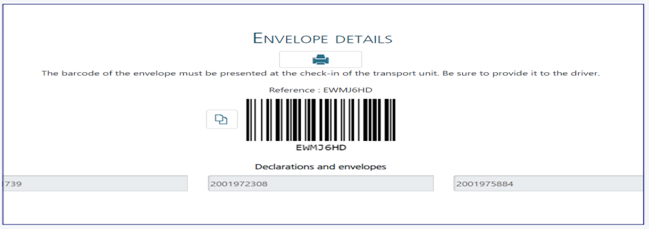
Montreuil, 18 November 2020 Memorandum to operators Re : Brexit – The Smart Border Ref : NA no. 20000161 of 17 November 2020 “Brexit – ICS Procedures” NA no. 20000162 of 17 November 2020 “Brexit – Customs clearance methods for imports in Delta G as part of the Smart Border” NA no. 20000164 of 17 November 2020 “Brexit – Transit and TIR management methods as part of the Smart Border for import and export flows” NA no. 20000165 of 17 November 2020 “Brexit – Customs clearance methods for exports in Delta G and the ECS as part of the Smart Border” NA no. 20000166 of 17 November 2020 “Brexit – New instructions on the national centralised customs clearance procedure (DCN) as part of the Smart Border” Encls : Appendix 1 – Smart Border IT architecture Appendix 2 – Smart Border process diagram Appendix 3 – Import and export pairing synopsis This document is a courtesy translation of the official French note on the subjectwhich is indicated in reference. Following the United Kingdom’s triggering of Article 50 of the Treaty on European Union on 29 March 2017 and the approval by British MPs and the European Parliament of the Withdrawal Agreement, the UK left the EU on 1 February 2020. This has been followed by a transition period until 31 December 2020 during which the UK is still part of the European Single Market and when no customs formalities are required for trade between the UK and EU Member States. It is only at the end of this period, on 1 January 2021 at midnight (French time), that customs procedures are to be reintroduced for trade with the EU. The Smart Border was set up by the Directorate General of Customs and Excise (DGDDI) to anticipate the reintroduction of customs procedures between the UK and France for road traffic using the ferries or Channel Tunnel via the cross-Channel border. This Smart Border, based on a dedicated IT application called the “SI Brexit”, has been introduced for entry and exit points in the Hauts-de-France, Normandy and Brittany regions for rollout on 1 January 2021. The purpose of this memorandum is to set out the goals and functioning of the Smart Border. This memorandum is accompanied by the above-referenced instructions. DGDDI Délégation aux relations internationales Pôle Affaires européennes – Equipe projet Brexit 11, rue des Deux Communes 93558 Montreuil Cedex Website: www.douane.gouv.fr Case Officer: Claire Dublois Emails: dg-dri@douane.finances.gouv.fr Ref: 20000160 1. Background and goals of the Smart Border 1.1 The reintroduction of procedures at the border As from 1 January 2021, at the border, economic operators will be subject to: • Customs procedures (safety/security, customs clearance or transit formalities) • Formalities for certain imported sanitary and phytosanitary (SPS) goods. As part of the Smart Border initiative, "SPS goods" mean goods subject to inspection at the border control post (BCP) at the first point of entry into the EU pursuant to Regulation (EU) No 2017/625 on official controls. These inspections are carried out at the first point of entry and lead to a common health entry document (CHED) being issued. This document is required prior to all customs clearance procedures. This essentially concerns live animals, products of animal origin, animal feed, plants, foodstuffs and products subject to increased controls or emergency measures. o Veterinary and phytosanitary procedures are verified by the Directorate General for Food (DGAL) and its devolved departments which are called Veterinary and Phytosanitary Border Inspection Offices (SIVEP). o Foodstuffs subject to increased controls and emergency measures are inspected either by the Le Havre Directorate General for Competition Policy, Consumer Affairs and Fraud Control (DGCCRF) or by French Customs (Dunkerque and Calais). 1.2 The specific nature of the cross-Channel border between the UK and France In order to maintain the fluidity of the border crossing, French Customs has devised a new border management method – the Smart Border – with the aim of only stopping, within tunnel infrastructures or ports, those means of transport that need to be pulled over and which are carrying goods that require additional customs procedures or a customs inspection. Implementation of this system: • Enables economic operators to comply with their statutory obligations in respect of customs and SPS formalities, • Maintains fluidity of the border crossing and keeps the economic model, avoiding long stoppages in situ which could cause infrastructure to become overrun, • Fosters the exchange of information between all stakeholders responsible for this border (carriers, ferry companies, tunnel, infrastructure managers, customs, SIVEP, etc.). 2. Principles of the Smart Border The Smart Border will be rolled out on 1 January 2021 at the entry and exit points in the Hauts-de- France region (Dunkerque and Calais ferry ports, Channel Tunnel in Calais), Normandy (ports of Ouistreham, Dieppe, Le Havre and Cherbourg) and Brittany (ports of Saint-Malo and Roscoff) to process flows of goods from and to the UK. The Smart Border is based on a new information system called SI Brexit. SI Brexit is an IT interface that allows for exchanges of information between transport companies offering routes from and to the UK (ferries and Channel Tunnel) and customs’ applications (ICS, Delta G, Delta T and ECS). The Smart Border’s IT architecture is described in Appendix 1. The Smart Border is based on three core principles: • The anticipation of customs procedures by economic operators prior to the departure of goods destined to cross the UK/France border, • Identification of the means of transport (truck or unaccompanied trailer – RNA) as soon as it arrives at the departure infrastructure by means of its number plates, • Automatic processing of customs procedures during the crossing and orienting the means of transport leaving the infrastructure for the import flow. 2 The smooth functioning of the Smart Border requires the involvement of all its stakeholders (economic operators, carriers, ferry and Channel Tunnel companies, infrastructure managers, customs, SIVEP, etc.). Drivers of means of transport have an especially crucial role in the Smart Border as they have vital information for orienting their truck or unaccompanied trailer and are solely responsible for following instructions at the infrastructure. 3. Functioning of the Smart Border All the Smart Border processes are described in Appendix 2. 3.1 Direction UK/France (import flow) This is a five-step process: anticipation of customs and sanitary formalities, followed by the pairing on the UK side, then the crossing, the disembarkation and the goods processing on the French side. a) Anticipation of customs and sanitary formalities prior to the pairing, UK side Clearance and transit procedures The economic operator responsible for the goods must carry out one of the following mandatory customs procedures for crossing the border between the UK and France: • File a pre-lodged customs import declaration in Delta G in advance (before the presentation of the goods), • File a common transit declaration in the UK’s transit system, • File a Union transit declaration in Delta T in advance (before the presentation of goods). The operator may use a registered customs representative to carry out these procedures. For SPS goods and prior to completing customs procedures, operators must pre-notify using the TRACES NT1 European IT application and state the pre-notification reference in the customs import or transit declaration. The customs procedure filed in advance will generate a barcode which the declarant (operator or registered customs representative) must provide to the carrier responsible for transporting the goods so that it can be scanned at the moment of the pairing. The declarant or carrier can combine a number of customs documents under a single barcode using the logistics envelope (https://www.douane.gouv.fr/enveloppe/). The envelope can be amended to remove or add declarations at any time before the pairing. Safety/security procedures In addition to clearance and transit formalities, the stakeholder responsible for the means of transport (the haulier for lorries, the ferry company for unaccompanied trailers) must file a safety/security entry summary declaration (ENS) using the ICS’ “Automate de Sûreté” (AS) online service. b) The pairing, UK side Upon arrival at the departure infrastructure, ferry or Channel Tunnel company employees match the number plate of the lorry/unaccompanied trailer with the customs documents by associating, in their information systems, the number plates with the following information given by the lorry driver or the operator responsible for the unaccompanied trailer: 1 This application enables the veterinary, phytosanitary and sanitary departments of the Member States to issue common health entry documents (CHED). 3 • Answers to the questions in the pairing synopsis asked by ferry or Channel Tunnel company employees. The pairing synopsis is presented in Appendix 3. • The barcode scan of the customs declarations The information systems of the ferry or Channel Tunnel companies send the pairing data to SI Brexit. At this stage, SI Brexit will check with the ICS that one or more entry summary declaration(s) are actually available for each means of transport. c) The crossing When the means of transport board the ferry or shuttle, the ferry or Channel Tunnel companies send, via their information systems, a boarding notice to SI Brexit, stating that all the lorries/unaccompanied trailers that have been previously identified in the pairing phase are on their way to France. Triggering orientation This boarding notice triggers the orientation process in SI Brexit. This takes place during the crossing and enables, upon arrival, the means of transport to be oriented depending on their status. There are two steps to the orientation process: • Orientation of the means of transport according to the status of the safety/security formalities • Then, if this first orientation phase is finalised, orientation of the means of transport according to the status of the clearance or transit declarations. It is as part of this orientation that the boarding notice will be sent to the clearance and transit applications in order to automate part of the customs procedures. Orientation according to clearance and transit procedures depends on several factors: • The answers provided by the driver at the pairing • The status of customs declarations in Delta G and Delta T applications. The principle is as follows for customs declarations: in order for a means of transport to be oriented on the “Green” lane, all its related customs formalities must have a valid status. Time delay timers For each point of entry, a timer has been introduced to defer the start of orientation actions in SI Brexit following receipt of the boarding notice. These timers can be set for each point of entry. They will be used mainly in the ports in Normandy and Brittany and they are intended to confine the validation of pre-lodged customs declarations to French territorial waters when the ferry is approaching the French port. Sending drivers orientations for the means of transport The ferry and Channel Tunnel companies recover the orientation data for the means of transport from SI Brexit and provide it to the drivers during the crossing using a variety of means (SMS sent to drivers, screen in the ferry or shuttle, etc.). d) The disembarkation Upon disembarking from the ferry or shuttle, the driver of the means of transport is aware of his orientation and must follow the signs put up by the infrastructure managers in order to go to the correct site: • If he is oriented into the “Green” lane, he may leave the infrastructure without stopping, • If he is oriented into the “Orange” lane, he must go to the customs parking, • If he is oriented into the “Orange SIVEP” lane, he must go to the SIVEP parking. e) Processing of lorries/unaccompanied trailers directed into the “Orange” parking The means of transport may be oriented on the customs or SIVEP parking for a variety of reasons. 4 When the lorries/unaccompanied trailers are in the customs or SIVEP parking, the operator, or its representative, must be at the disposal of the customs authorities or the Directorate General for Food (DGAL) and be able to be contacted by the driver to settle any customs or sanitary/phytosanitary issue. Once all the procedures have been completed, the lorry/unaccompanied trailer may leave the infrastructure. 3.2 Direction France/UK (export flow) This is a four-step process: anticipation of customs formalities before the pairing on the EU side, followed by the pairing and the processing of lorries/unaccompanied trailers and, lastly, the boarding for the UK. a) Anticipation of customs formalities prior to the pairing, EU side The economic operator responsible for the goods must carry out the mandatory customs procedures for crossing the border between the EU and UK: • File a customs export declaration in Delta G or in another clearance application of an EU Member State, • or file a common transit declaration in the transit system of a Member State, • or file a Union transit declaration in the transit system of a Member State. The operator may use a registered customs representative to carry out these procedures. The declarant, whether the operator or the registered customs representative, must provide the carrier with the barcode of the customs documents covering the goods. The declarant or carrier can combine a number of customs documents under a single barcode using the logistics envelope (https://www.douane.gouv.fr/enveloppe/). The envelope can be amended to remove or add declarations at any time before the pairing operation. b) The pairing, French side Upon arrival at the departure infrastructure, ferry or Channel Tunnel company employees match the number plate of the lorry/unaccompanied trailer with the customs documents by associating, in their information systems, the number plates with the following information given by the lorry driver or the operator responsible for the unaccompanied trailer: • The answers to the questions in the pairing synopsis asked by ferry or Channel Tunnel company employees. The pairing synopsis is presented in Appendix 3. • The barcode scan of the customs documents The ferry or Channel Tunnel companies send the pairing data to SI Brexit. c) Processing lorries/unaccompanied trailers whose status indicates an incomplete customs procedure or that a customs inspection must be conducted If export or exit customs formalities have not been completed, the means of transport will be stopped by customs after the pairing. In this case, the operator or its representative must be at the disposal of the customs authorities to settle any customs issue. d) The boarding for the UK 5 When the means of transport board the ferry or shuttle, the ferry or Channel Tunnel companies send, via their information systems, a boarding notice to SI Brexit, stating that all the lorries/unaccompanied trailers that have been previously identified in the pairing phase are on their way to the UK. This boarding notice is sent by SI Brexit to the ECS, the customs application for the exit of goods, in order to automate the announcement of the exiting of the goods and finalise the export procedure. 4. Final provisions The Economic Action Centres (PAE) must be informed of any problems in applying these provisions. My offices are at your disposal to provide any further information. The Brexit Project Manager Signed Jean-Michel Thillier 6
 海关法规查询系统